


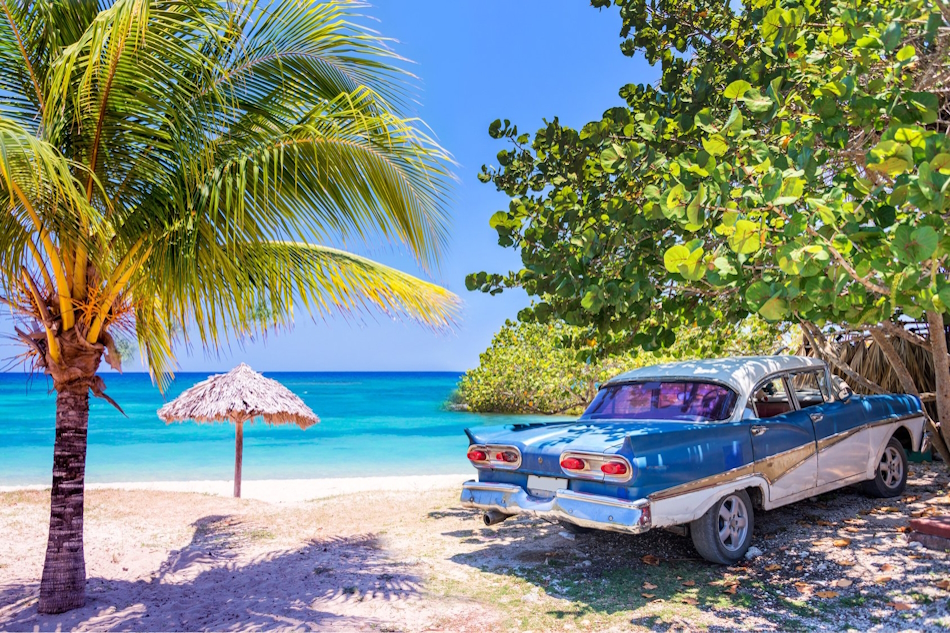
Cuba, the heart of the Caribbean, is an island known for its rich history, vibrant culture, and unmistakable character.
From the historic streets of Havana to the idyllic beaches of Varadero, it offers an authentic experience deeply rooted in its revolutionary history and cultural heritage.
Let’s take a look at some of the most attractive destinations Cuba has to offer.
1. Havana – A city frozen in time
Havana, the capital of Cuba, is like a living museum of colonial architecture, vintage cars, and political monuments. Stroll along the Malecón, a long coastal boulevard where you can feel the pulsating rhythm of the city, or visit the old part of Havana, which is a UNESCO World Heritage Site.
Don’t forget to enjoy authentic Cuban cigars and traditional mojitos in one of the bars, where live Cuban music is often played.
Historical monuments and culture
Havana’s streets are steeped in history, with landmarks at every turn telling the story of its rich past. A must-visit is the Cathedral of St. Christopher, one of the finest examples of Baroque architecture in all of Cuba.
A stroll through the Plaza de la Revolución will allow you to see the iconic images of Che Guevara and Camilo Cienfuegos, symbols of the Cuban revolution.
Art and music
Havana is also the center of Cuban art and music. Visit the Museo Nacional de Bellas Artes, where you can admire the works of Cuban artists, or attend a concert at the legendary Tropicana club, where salsa, rumba and other traditional Cuban rhythms mix.
2. Trinidad – Colonial treasures and cultural gems
Trinidad, also a UNESCO World Heritage Site, is one of the best-preserved colonial towns in the Caribbean. This small town with well-maintained streets and pastel-colored houses offers a glimpse of life in Cuba before the revolution.
Visit the Palacio Cantero historical museum or go horseback riding in the surrounding mountains.
Traditional crafts and markets
Trinidad is known for its traditional crafts and markets, where you can find handmade souvenirs such as pottery, textiles, and jewelry. Strolling through the local markets will allow you to get to know the local culture and meet the artisans who lovingly create their works.
Natural beauty
The area around Trinidad offers beautiful natural scenery, including the Topes de Collantes National Park, where you can discover waterfalls, caves, and rich flora and fauna. Hiking in this park is a great way to experience Cuban nature at its purest.
3. Varadero – Beach paradise
Varadero is one of the most popular resorts in Cuba, with more than 20 kilometers of white sandy beaches. The area is ideal for water sports, including diving and snorkeling, where you can admire colorful coral reefs and rich marine life.
Luxury resorts and activities
Varadero is home to many luxury resorts offering everything from wellness services to golf courses. Visitors can enjoy various activities such as sailing, fishing, or catamaran riding, making Varadero the ideal place for those seeking relaxation and entertainment.
Nature reserves
Near Varadero is the Varahicacos Nature Reserve, where you can explore caves with prehistoric drawings and rare species of plants and animals. This reserve offers a unique glimpse into Cuba’s natural wealth and is an ideal place for nature lovers.
4. Viñales – Breathtaking natural landscape
The Viñales Valley, known for its rock formations and traditional tobacco farms, is an amazing place for nature lovers. This area offers beautiful views of the green valley and the opportunity to learn more about Cuban cigar production directly from local farmers.
Traditional agriculture
Viñales is known for its traditional agricultural methods used in tobacco cultivation. Visitors can visit local farms to learn about the cigar-making process and taste some of the best Cuban cigars straight from the source.
Outdoor activities
The area around Viñales offers a variety of outdoor activities, including hiking, horseback riding, and cycling. A walk through the valleys and hills will allow you to discover beautiful views and hidden caves that are home to rare species of bats and other wildlife.
5. Santiago de Cuba – Cradle of the Revolution
Santiago de Cuba, Cuba’s second largest city, is rich in political and revolutionary history. Visit the Castillo del Morro, an old fortress built to defend against pirates, or the Santa Ifigenia National Cemetery, where many important figures, including Fidel Castro, are buried.
Cultural heritage
Santiago de Cuba is known for its rich cultural scene, which includes music, dance, and art. The city is considered the birthplace of Cuban music, including genres such as son and trova. Visitors can experience authentic musical performances in local clubs and at festivals held throughout the year.
Historical landmarks
The city is full of historical landmarks that tell the story of the Cuban Revolution and its heroes. Visit the Museo Emilio Bacardí to learn more about the city’s history and its role in the revolution, or stroll through the streets where important events in Cuban history took place.
6. Cienfuegos – Pearl of the South
Cienfuegos, known as the “Pearl of the South,” is a city with a strong French influence, which is reflected in its architecture and culture. This port city is known for its beautiful bay and historic center, which is listed as a UNESCO World Heritage Site.
Architectural gems
Cienfuegos boasts beautiful buildings such as the Palacio de Valle, which combines Gothic, Venetian, and Moorish elements. A stroll along the Paseo del Prado boulevard allows you to admire elegant colonial houses and visit the Parque José Martí, where you will find a beautiful cathedral and the Tomás Terry Theater.
Cultural events
The city is known for its cultural events, including music festivals and theater performances. Cienfuegos is also home to many galleries and museums where you can learn about local art and history.
7. Camagüey – A labyrinth of streets
Camagüey, one of the oldest cities in Cuba, is known for its unique urban layout, which resembles a labyrinth. The city was designed to confuse pirates, and its narrow streets and squares offer visitors a unique experience.
Arts and crafts
Camagüey is the center of Cuban arts and crafts. The city is full of galleries and studios where you can admire the works of local artists. Visitors can also visit traditional pottery workshops where typical Cuban “tinajones” pots are made.
Historical monuments
The city is full of historical monuments, including churches and monasteries that bear witness to its rich past. Visit the Ignacio Agramonte Provincial Museum to learn more about the history of the region and its role in the struggle for Cuban independence.
8. Holguín – City of Parks
Holguín, known as the “City of Parks,” is surrounded by beautiful nature and offers many opportunities for exploration. The city is famous for its beautiful parks and squares, which are ideal for walking and relaxing.
Natural beauty
There are beautiful beaches in the vicinity of Holguín, such as Playa Esmeralda, which is known for its white sands and turquoise waters. Visitors can also explore nature reserves such as the Alejandro de Humboldt National Park, which is home to many endemic species of plants and animals.
Cultural heritage
Holguín is also known for its rich cultural scene, including music and dance festivals. The city is home to many museums and galleries where you can learn about local art and history.
9. Baracoa – Cuba’s First City
Baracoa, known as “Cuba’s First City,” is a hidden gem on the island’s east coast. Surrounded by beautiful nature, including mountains and rainforests, this city offers a unique glimpse into Cuban history and culture.
Natural wonders
Baracoa is surrounded by beautiful nature, including the Alejandro de Humboldt National Park, which is listed as a UNESCO World Heritage Site. Visitors can explore waterfalls, rivers, and rich flora and fauna, making this area a paradise for nature lovers.
Historical monuments
The city is full of historical monuments, including forts and churches that bear witness to its rich past. Visit the Museo Municipal to learn more about the history of Baracoa and its role in the discovery of Cuba.
10. Santa Clara – City of Revolution
Santa Clara is known as the site of one of the most important battles of the Cuban Revolution. This city is home to many monuments commemorating Cuba’s revolutionary history and is an essential stop for those interested in history.
Che Guevara Memorial
One of the main attractions of Santa Clara is the Che Guevara Memorial and Mausoleum, where his remains are laid to rest. Visitors can visit the museum, which documents the life and work of this iconic revolutionary, and learn more about his role in the Cuban Revolution.
Cultural events
Santa Clara is also known for its lively cultural scene, including music and theater performances. The city is home to many art galleries and cultural centers where you can discover local art and culture.
11. Matanzas – The Athens of Cuba
Matanzas, known as the “Athens of Cuba,” is a city with a rich cultural and literary tradition. This city is known for its theaters, museums, and historical monuments, which offer a glimpse into Cuban culture and history.
Sauto Theater
One of the main attractions of Matanzas is the Sauto Theater, considered one of the most beautiful theaters in Cuba. This historic theater offers a wide range of performances, including ballet, opera, and concerts, and is an integral part of the city’s cultural life.
Natural beauty
The area around Matanzas is home to some stunning natural scenery, including the Yumuri Valley and the Bellamar Caves, which are some of the oldest and largest caves in Cuba. These natural wonders offer a unique insight into the geological history of the island and are ideal for nature lovers.
12. Bayamo – Cradle of Cuban Nationality
Bayamo is one of the oldest cities in Cuba and is considered the cradle of Cuban nationality. This city played a key role in the struggle for Cuban independence and is home to many historical monuments that commemorate its revolutionary past.
Historical landmarks
Bayamo is full of historical landmarks, including the Plaza del Himno, where the Cuban national anthem was first sung. Visitors can also visit the birthplace of Carlos Manuel de Céspedes, the father of the Cuban homeland, and learn more about his role in the struggle for independence.
Cultural heritage
The city is known for its rich cultural scene, including music and dance festivals. Bayamo is also home to many museums and galleries where you can learn about local art and history.
Conclusion
Cuba is a country where history and culture connect the present with the past in a unique Caribbean rhythm. Whether you are looking for adventure, cultural richness, or just relaxation on beautiful beaches, Cuba offers unforgettable experiences that appeal to every visitor.
Discover the true atmosphere of Cuba and let yourself be carried away by its unique charm. From the vibrant Havana to the peaceful Viñales Valley, Cuba is a destination that offers something for everyone.
Interesting
Cuba has an important geographical location and controls a significant part of the American Mediterranean. The capital and largest city is Havana (La Habana). It is separated from Florida in the west by the 180 km wide Florida Strait.
It is separated from the Yucatán Peninsula by the 210 km wide Yucatán Strait, from the island of Haiti in the east by the Paso de los Vientos Strait, from the Bahamas in the northeast by the Bahamas Strait, and in the south it approaches Jamaica at a distance of 140 km.
It lies on the largest island of the Greater Antilles. The main island accounts for 94% of the territory. It has an elongated shape, is 1,275 km long and 31 to 191 km wide. It also extends to 1,600 larger and smaller islands.
The total area of the state is 110,922 km². The coastline, with a total length of 3,500 km, is very rugged, mostly flat and marshy, only steep and inaccessible in the southeast. Cuba’s closest neighbors are the Bahamas and the United States to the north, Haiti to the east, Jamaica and the British-owned Cayman Islands to the south, and Mexico to the west.
The surface of Cuba is mostly gently rolling hills. A smaller part of the territory is made up of lowlands (especially coastal). The highest peak is Pico Turquino (1,974 m above sea level). The longest river is the Canto River (250 km).
Cuba has a tropical, trade wind climate with a clearly defined rainy season. The average temperature of the hottest month of the year, July, is 27 °C, and the average temperature of the coldest month, January, is 23 °C. Minimum temperatures are below 5 °C and maximum temperatures reach 40 °C.
The long-term annual average temperature is 25.5 °C. The eastern and northeastern trade winds bring moisture and create a humid windward side and a dry leeward side in the mountains. The rainy season lasts from May to October (75% of annual precipitation). The driest month is February.
The average annual precipitation is 1,300 mm. The eastern coast is the most irrigated, with up to 1,900 mm of precipitation per year. This causes high air humidity of about 70-80%. The northwestern part is often hit by storms and hurricanes, about 10 per year, which cause considerable damage.
They come regularly from the Caribbean Sea or form on the overheated surface of the nearby Atlantic Ocean. Sometimes a hurricane hits the sea, causing it to storm and large waves to cause great losses. The most destructive waves were recorded on September 9, 1932, when a huge storm wave destroyed the entire town of Santa Cruz del Sur.
On October 28, 1492, Christopher Columbus discovered the island. It was here that Europeans first encountered tobacco smoking. They found new crops such as cotton, beans, mames (sweet potatoes), corn, etc.
In the spring of 1494, on his second voyage to the New World, Columbus visited Guantanamo Bay, which he named Puerto Grande. In 1511, Spanish colonization began, coming from Haiti. It ended in 1898 after the Spanish-American War and came under the control of the United States.
Four years later, it declared independence. In the early 1930s, Cuba was ravaged by fighting between sugar monopolies and fruit monopolies, both of which were controlled by American monopolists.
Directly related to these essentially competitive struggles between capitalist predators, there were frequent “pronunciamentos” and coups typical of South America at the time, in the interests of one group or another. The ordinary people, who at that time did not always understand the true nature and character of such “revolutions,” were easily led.
They often believed that they were fighting for the social rights of their people. In 1952, the dictator Fulgencio Batista came to power. However, on January 1, 1959, Batista was overthrown by a revolutionary group led by 27-year-old Fidel Castro Ruz.
Cuba became a socialist state after a revolutionary government was established, with Fidel Castro as its president. He remained in this position until 2008, when he stepped down and was succeeded by his brother Raúl Castro.
The original Indian population consisted of the Siboney and Guanajatabey tribes, who lived mainly on the coast and lived by fishing. In the 7th-9th centuries, groups of Arawaks immigrated to Cuba and suppressed the indigenous population.
After the Spanish conquest of Cuba, the Indians gradually died out as a result of cruel treatment and imported diseases. In 1532, there were only 5,000 left. However, with the development of plantation agriculture, a labor shortage became apparent; Spanish landowners solved this by importing black slaves from Africa to Cuba.
From 1792 to 1817, the number of blacks and mulattos increased from 119,000 to 315,000, making up 65% of the total population. Between 1780 and 1880, almost a million black slaves were brought to Cuba, forming the majority of the Cuban population.
After the abolition of slavery in 1886, emigration of the white population from Spain increased. Soon, 45,000 white workers were working on sugar cane plantations. Immigration from Spain continued later: between 1919 and 1931, 300,000 people arrived in Cuba. Today, the white population predominates in Cuba.
The official holidays are: Independence Day (January 1) – commemorating the revolution and coup d’état of 1959, Labor Day (May 1), Mother’s Day (second Sunday in May), Day of the Beginning of the War of Independence from Spain (October 10).
Christian holidays were long unofficial and celebrated only within the family, but this changed in 1998 (in the case of Christmas) and in 2012 (Easter) after visits by Popes John Paul II and Benedict XVI.
Cuba’s economy is state-controlled and was closely allied with the USSR until its collapse in 1991. In contrast, the United States imposed a political and economic embargo on Cuba. Since 1991, it has focused mainly on trade with China.
Agriculture has long been the leading sector of the Cuban economy. Before 1990, Cuba was one of the three largest sugar cane growers in the world. The famous Cuban rum was made from sugar cane. Much of the sugar was exported to the Soviet Union, but after its collapse, both production and exports declined.
Other exports include rum, oranges, grapefruit, cigars, medicines, cigarettes, coffee, pineapple, mango, and avocado. Cuba has large mineral resources, such as chromium, nickel, cobalt, and copper ores. However, it has no energy resources or fuel.
Oil and natural gas deposits are very small, and the rivers are short and lack energy. Cuba imported energy resources from the USSR. A large part of the Cuban economy depends on remittances.
National anthem
La Bayamesa
El Himno de Bayamo
(The Bayamo Anthem)