


The manufacturer is once again pushing the boundaries of technological innovation with the introduction of the latest iPhone 16 series.
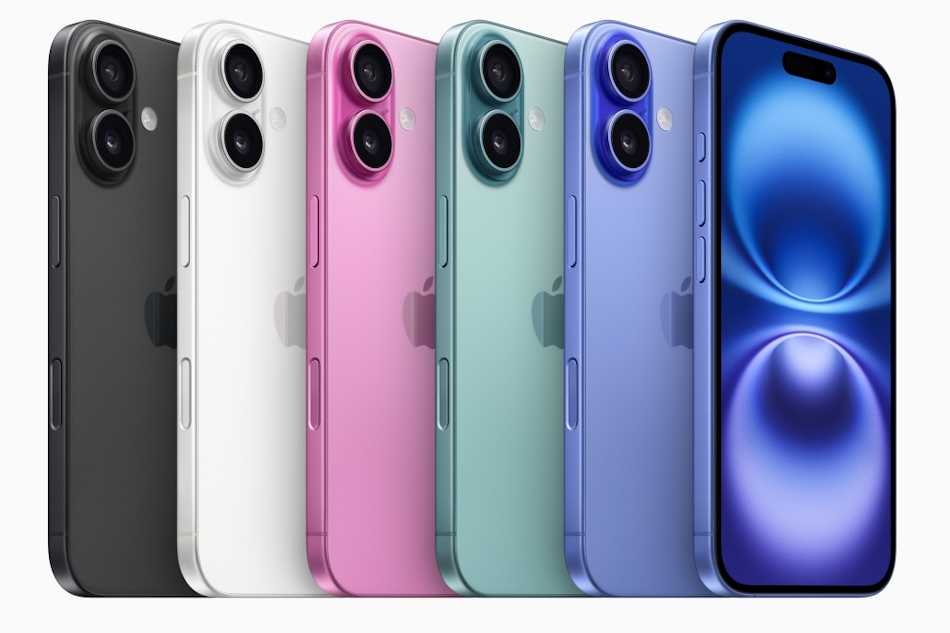
The presentation began with the chassis, which features new aerospace-grade aluminum and a 50% harder ceramic shield. In sunny weather, the display can deliver 2000 nits, similar to the iPhone 14 Pro (Max), and in the dark, the brightness can be reduced to 1 nit. The iPhone 16 has a 6.1-inch display, while the larger iPhone Plus with a bigger battery has a 6.7-inch display. The action button from the iPhone 15 Pro (Max) is also coming, which is programmable.
However, a completely new feature is the camera control button, which allows various camera-related functions and also works with third-party apps. The phone is powered by the A18 chip, which skips the A17 Pro from the iPhone 15 Pro. The new chip is 2× faster in machine learning than its predecessor with the A16 chip. It also has 17% more system memory bandwidth, enabling more efficient access to generative models, and uses a second-generation 3nm manufacturing process.
The core combination is classic, with two powerful cores and four energy-efficient cores. CPU performance is 60% higher than the iPhone 12 (A14 Bionic). At the same time, it consumes 30% less energy than the A16. The GPU is 5-core. It is twice as fast as the iPhone 12 and outperforms its predecessor, the iPhone 15, by 40%. It consumes 35% less power while delivering the same performance.
The conversation then turned to Apple’s artificial intelligence, Apple Intelligence. For example, it will be possible to search Photos for a specific person wearing a specific color of clothing. Siri will also be able to handle more complex multi-step commands. Unfortunately, Apple Intelligence will initially only be available in US English and, in December, in localized English for Australia, Canada, New Zealand, South Africa, and the United Kingdom.
Next year, we will only see Chinese, French, Japanese, and Spanish. Slovak and Czech are not in sight, and even for a widely spoken language such as German, it is not known when it will be supported. Another example of the use of artificial intelligence is the ability to point the camera at an object and automatically search for information such as restaurant opening hours or dog breeds.
Images can be sent to other apps, such as ChatGPT and Google, and Apple promises that there will be an overview of what information is being sent. We hope that there will be an option not to share metadata, especially those with GPS coordinates. These features will be available in Camera Control, a new button on the side of the iPhone. Older iPhones without this hardware button will probably not get the feature, which would make sense (although owners will not be happy).
Currently, the oldest iPhone with Apple Intelligence support is the iPhone 15 Pro (Max), and it is the only model with support and no Camera Control button. The new physical camera button is covered with sapphire crystal and stainless steel in a color that matches the color of the phone. It is a combination of a force and haptic engine that provides a responsive haptic response like a classic camera with a physical shutter button.
It supports various gestures and distinguishes between pressing and pressing down. With a light double press, controls such as zoom, depth of field, exposure, and more are displayed. It also works with third-party apps, so it’s not limited to the built-in camera app. The main camera, known as the 1x zoom, has a classic 26 mm focal length and 2 um quad-pixel, which allows the 48 MPx sensor to create a 12 MPx photo with high light transmission, known as pixel binning.
The resolution is 48 MPx from the 14 Pro (Max) and iPhone 15 models, allowing for a 2× telephoto lens at 12 MPx resolution. It will also be possible to take 24 MPx photos, balancing more detail with higher light transmission. Although the ultra-wide-angle camera remains at 12 MPx on the base model, it will let in 2.6× more light. Macro photography is even better, and the company is presenting the base iPhone’s sensors as 4-in-1 (macro, 0.5×, 1×, and 2×).
The basic series will now also allow you to record spatial videos for Apple Vision Pro. The iPhone 16 delivers up to 30% more sustainable gaming performance and features hardware-accelerated ray tracing. It will allow you to play AAA console games that previously only worked on the iPhone 15 Pro (Max) and possibly iPads Pro/Air with an M1 series chip and higher. Satellite communication and messaging are expanding to 17 new locations, including several more European countries like Austria. This is especially useful in vast, remote areas often found in the US, where mobile signal can be unreliable.
However, only Austria will receive it from our geographical neighbors. It is used for emergency communication in places where there is no mobile connection and Wi-Fi cannot be used. Fortunately, there are few such places in Europe, and 2G signals work in most of Europe. The problem is more prevalent in the US, where there is often no signal in vast, remote prairies. The new iPhones also support Wi-Fi 7.
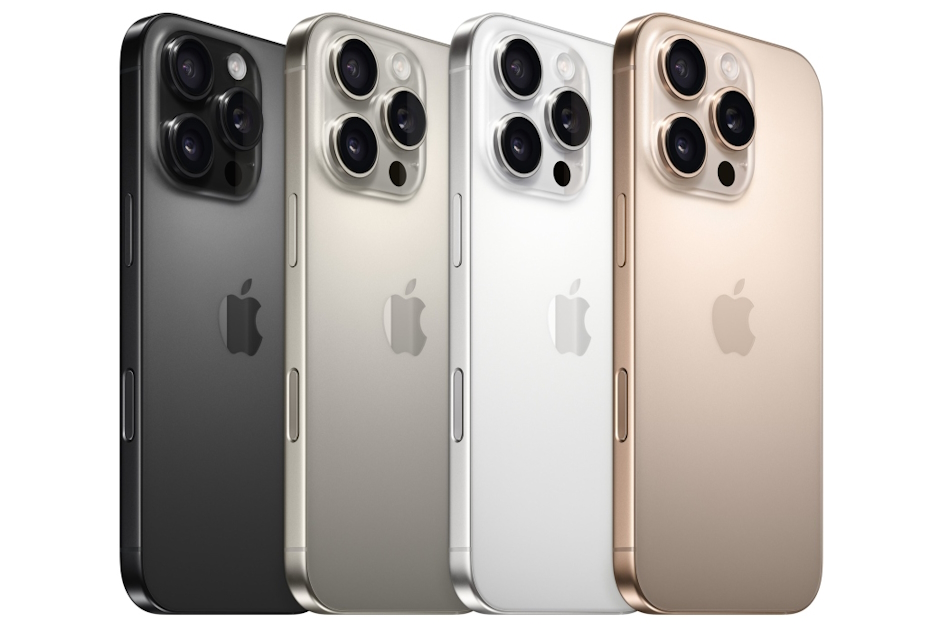
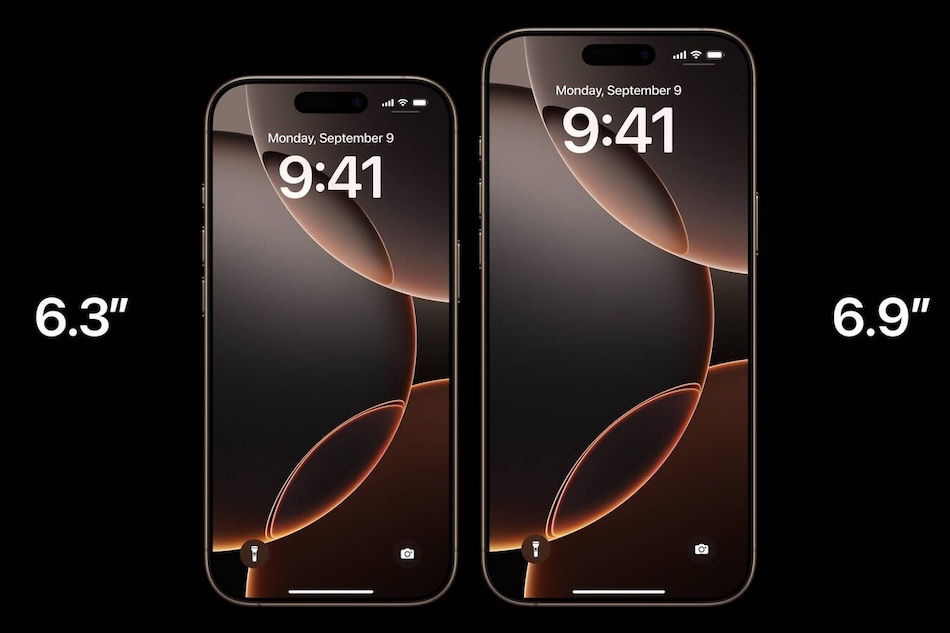
However, the Pro series is more eagerly awaited, as it is traditionally more interesting. It will offer larger displays, 6.3“ and a huge 6.9” Max version, slowly approaching the older iPad mini models. The chassis comes in Black Titanium, White Titanium, natural Titanium, and a new Desert Titanium. Thanks to battery optimization, a larger battery, and better power management, the iPhone 16 Pro (and especially the Max) will be the company’s longest-lasting smartphones ever.
The hardware is based on an improved A18 Pro chip. The Neural Engine still manages 35 TOPS, but has 17% more bandwidth, similar to the weaker A18. The 6-core GPU is 20% faster than in the A17 Pro and the CPU is 15% more powerful. However, the USB port speed has not changed, with the basic iPhones still at USB 2.0. ProRes accelerators can handle twice as much data for video encoding.
The main sensor has a resolution of 48 MPx and 2.44 um quad-pixel. The focal length is slightly lower than on the basic iPhone, at 24 mm, which in practice means a slightly larger sensor range without the distortion typical of ultra-wide-angle sensors. The 48 MPx resolution is also being adopted by the ultra-wide-angle sensor for the first time. This allows such photos to have more light or 4× more detail.
The telephoto lens still has 12 MPx, which may be a deal-breaker for some. The focal length of the telephoto lens is 120 mm, which corresponds to a 5× zoom compared to the main sensor, so even the smaller iPhone 16 Pro has a higher zoom. 4K video also supports a frame rate of 120 FPS, thanks to faster sensors on the 48 MPx camera, which suggests that this probably does not work with the telephoto lens.
The 120 FPS recording speed can be further reduced to 60, 30 or 24 frames per second, and Dolby Vision for HDR video is also supported. Spatial Audio is supported during video recording for a better viewing experience with supported AirPods or Apple Vision Pro. The Audio Mix feature distinguishes human voices from background noise.
A similar update is coming to Voice Memo, which will allow audio to be recorded into an existing recording as a separate layer. MagSafe will enable 25W charging. New silicone and transparent cases will be added, while FineWoven material will be discontinued. In addition to the new MagSafe chargers, Qi 2 support will be added.
In Europe, the price for the baseline iPhone 16 (128GB) starts at €949, while in the US, it is expected to start at around $899. The Plus model will cost an additional €150/$150, bringing the total to €1,099 or approximately $1,049. The Pro model with 128GB of storage is priced at €1,199 ($1,199), while the Max version, which starts with 256GB of storage, will be available for €1,449 ($1,499). Pre-orders will be available from September 13, with the first units shipping on September 20.