

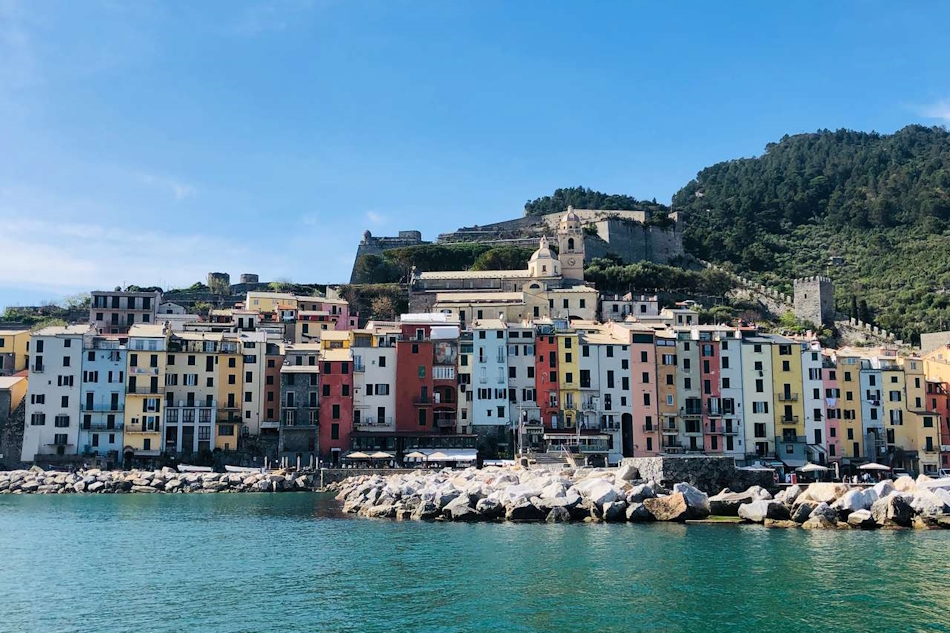
Portovenere and its stunning coastline have inspired writers and artists.
Today, however, few visitors from Great Britain come here. It’s easy to understand why Portovenere is called the “sixth Cinque Terre.” It is a romantic town with tall, colorful houses and narrow streets, located on the coast west of the Gulf of La Spezia. Like Cinque Terre, Portovenere is protected as a UNESCO World Heritage site. Unlike its famous five neighbors, however, it does not have a train station, which helps keep the tourist crowds at bay.
Read also:
Italy – A land of history, art, and gastronomy
The area known as the Riviera di Levante is quieter than the coast west of Genoa and still retains what made it famous: mountains falling into the deep blue sea, a pleasant climate, picturesque villages, remote coves, and unspoiled nature. This image may be familiar to you, but few Europeans outside of Italy know where the Italian Riviera is located.
Many travel to the French Riviera in the west and Tuscany in the east, but the “second Riviera” or Liguria, as it is officially called, has been relatively neglected by foreign European travelers. In the 19th century, however, it was different, when wealthy British and other northern Europeans came to the coast in winter, attracted by the dramatic natural beauty and mild winters.
The sleepy fishing villages west of Genoa became a playground for the northern European nobility, while in the east, the beautiful Gulf of La Spezia inspired many poets, from Dante and Petrarch to Shelley and Byron. Since 1919, it has been known as the Gulf of Poets. With its six-story houses under the castle, Portovenere is a beautiful sight if you arrive by boat.
The beautiful Gothic Church of St. Peter stands at the end of a windy promontory and welcomes sailors. On this site once stood a Roman temple to the goddess Venus (Venere), which gave the port its name. The nearby Grotta Arpaia, also known as Byron’s Grotto, is the place from which the poet Byron allegedly began his epic 8 km swim across the gulf in 1822 to visit Percy Bysshe Shelley in his last home, Casa Magna, in San Terenzo.
In the same year, Shelley drowned in a storm while returning from Livorno after visiting Byron. Shelley’s wife, Mary Wollstonecraft, is said to have found inspiration for Frankenstein in the castle in nearby Lerici. The steep climb to Castello Doria is rewarded with magnificent views of the gulf. In the 12th century, Portovenere was fortified by the Genoese to defend against the Pisans, who built a fortress in Lerici on the other side of the gulf.
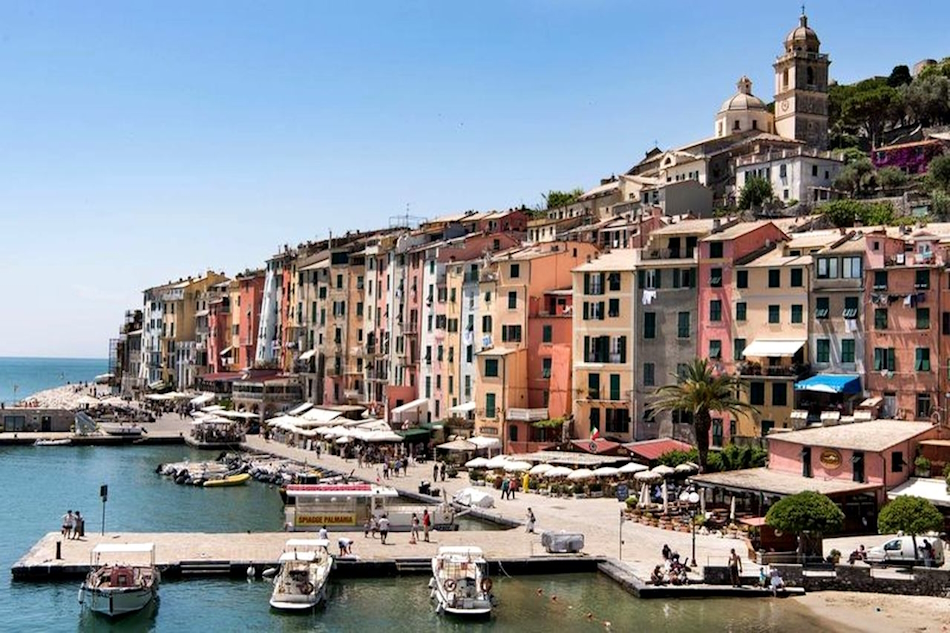
The houses formed defensive walls with trap doors that blocked the stairs and alleys between them. From the bustling waterfront, steep, narrow stairs lead to the cobbled street and alleys of the old town, with the charming Romanesque Church of St. Lawrence and the impressive Genoese walls on the cliffs. From here, there are beautiful views of Cinque Terre. The waterfront is full of cafes and open-air restaurants serving local seafood.
From the port, boats regularly depart for trips around the islands of Palmaria, Tino, and Tinetto. The last two are military zones, but visitors can land on the larger island of Palmaria, which has well-marked hiking trails and beautiful views of the cliffs, coves, and islands. A walk around the entire island takes approximately 4-5 hours, and there are rocks and pebble coves for swimming.
Once remote, connected only by foot and boat, Cinque Terre is now one of the most visited attractions in northern Italy. Despite commercialization, these five villages are still like postcards. The hiking trails and stunning views along the coast attract many visitors who come by boats and trains. It is ideal to come out of season (November to mid-April) or, during the busiest times, to admire the villages from a boat or ferry.
Vernazza is probably the most beautiful of the villages with its tightly packed houses and impressive church around the small harbor. Corniglia, located high on a rocky outcrop about 100 meters above the sea, is the smallest and least touristy of the five, as it requires climbing 377 steps from the train station. Each village has a Gothic church and typically a cluster of pastel-colored houses clinging to the steep slopes and centered around a central square.
The five villages are connected by the Sentiero Azzurro (Blue Path), which is 14 km long and takes approximately five hours or more. For this path, hikers must purchase a Cinque Terre Trekking Card, the proceeds of which are mainly used for the maintenance of the territory. A remarkable 11,000 km of dry stone walls were created over centuries to cultivate vines on the steep cliffs. Today, there is little enthusiasm for the strenuous work of digging the soil, restoring the walls, and working the vines by hand.
In Cinque Terre today, you will find only about a dozen winemakers. One of them is Heydi Bonanini, who is passionate about the landscape and has restored his family’s terrace, piece by piece, at a time when everyone was abandoning the steep slopes. You can visit his Possa vineyard in Riomaggiore, where chemically untreated vines hang over the sea and bees enjoy the wild flowers and herbs all year round.
You can taste the fruits of Heydi’s labor at the wine bar in town. The most famous of his wines is the nectar-like dessert wine Sciacchetrà, for which he has won many prestigious awards. The maintenance of the terraces is essential to prevent landslides. Floods in October 2011 caused extensive damage in Monterosso and Vernazza. The fragrant and refreshing white wines of the region pair well with local seafood. Oysters and mussels are grown locally, in the clean waters between Portovenere and the island of Palmaria.
You can combine a visit to the archipelago with a trip to an oyster farm and an explanation of how the shellfish are grown. There is nothing more pleasant than a morning walk on Palmaria, followed by lunch on board with plates of mussels and oysters, washed down with local white wine. Afterwards, you can refresh yourself in a cove, take a scenic tour of the dramatic cliffs, and then enjoy the beautiful sunset views as you return to Portovenere.