

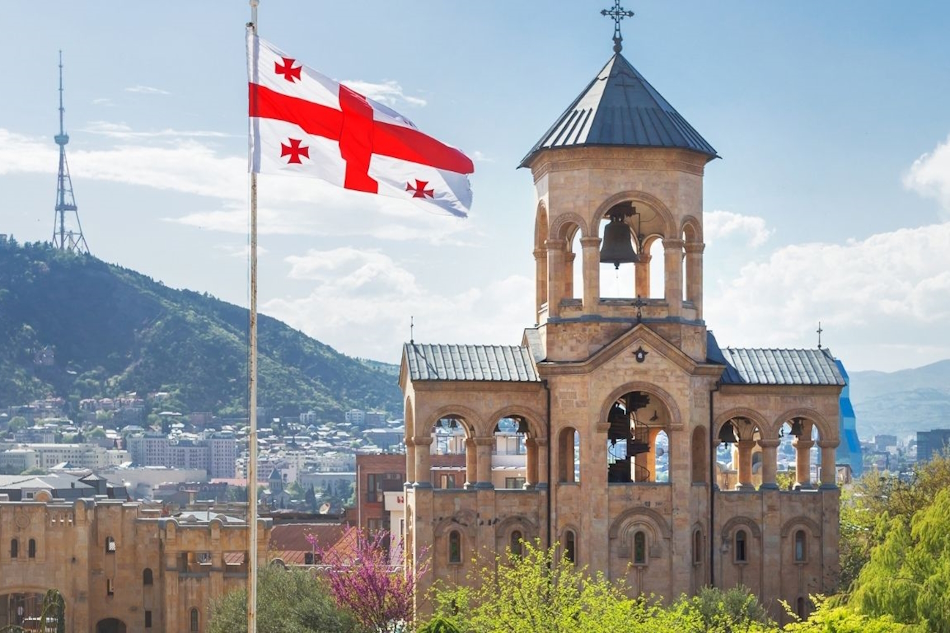
Georgia is known for its rich history and breathtaking natural beauty.
From the majestic Caucasus Mountains to green valleys full of vineyards, Georgia offers visitors a variety of experiences that will delight lovers of nature, history, and gastronomy. In the following article, we will take a look at some of the most important places and attractions that you should not miss when visiting this amazing country.
1. Tbilisi – The Heart of Georgia
Tbilisi, the capital of Georgia, is a lively city with a rich history. A walk through the old town will take you to colorful houses, ancient churches, and narrow streets that bear witness to the city’s rich history.
Visit the Narikala Fortress, which dominates the city skyline, or stop at one of the many cafes and taste traditional Georgian wine. Tbilisi is also known for its architecture, which combines different styles from medieval churches to modern buildings.
Among the most important sights are the Holy Trinity Cathedral, one of the largest Orthodox cathedrals in the world, and the Bridge of Peace, a modern glass structure that connects the old and new parts of the city. Tbilisi is also home to many museums, galleries, and theaters that offer a rich cultural program.
2. Kakheti – Land of Wine
Kakheti, the eastern province of Georgia, is the heart of Georgian viticulture. The region is known for its extensive vineyards and traditional method of wine production in clay vessels called qvevri.
Visit the town of Sighnaghi, which offers stunning views of the surrounding vineyards and is the perfect place to taste local wines. Kakheti is also home to many historical monuments, such as the Alaverdi Monastery, which was founded in the 6th century and is one of the oldest monasteries in Georgia.
Visitors can also visit Bodbe Monastery, where Saint Nino, who brought Christianity to Georgia, is buried. Kakheti offers a number of wineries where you can enjoy wine tastings and learn more about traditional winemaking methods.
3. Mestia – Gateway to Svaneti
Mestia, the capital of the Svaneti region in northwestern Georgia, is surrounded by high mountains and is known for its 12th-century defensive towers. This area is a paradise for tourists who enjoy hiking and mountain sports.
Visit the local museums to learn more about the rich history and culture of this ancient mountain people. Svaneti is known for its unique architecture and culture, which has been preserved thanks to the region’s isolation.
The defensive towers scattered throughout the area served as refuges for families during times of war. Mestia is also the starting point for climbs to some of the highest peaks in the Caucasus, such as Mount Ushba, which is considered one of the most difficult mountains to climb.
4. Vardzia – Rock City
Vardzia is a stunning 12th-century rock monastery carved into the side of a mountain in southern Georgia. This complex was once home to thousands of monks and is now a fascinating testament to Georgian engineering and spirituality.
The rock-hewn town offers visitors an unforgettable glimpse into the past and is a popular destination for photographers and historians. Vardzia was built during the reign of King Giorgi III and his daughter, Queen Tamara, who is considered one of the most important figures in Georgian history.
The complex includes more than 600 rooms, including churches, chapels, living quarters, and storage rooms. Visitors can explore these ancient spaces and admire the beautiful frescoes that adorn the monastery walls.
5. Batumi – A modern seaside city
Batumi, the capital of the Autonomous Republic of Adjara, is a modern seaside city on the Black Sea coast of Georgia. The city is known for its architecture and botanical garden, which is one of the oldest in the former Soviet Union.
Batumi is also known for its lively nightlife and cultural festivals, which attract tourists from all over the world. It is also a popular destination for tourists looking for a combination of beach relaxation and city life.
The city offers a number of beaches where you can enjoy the sun and sea, as well as modern attractions such as Batumi Boulevard, which is an ideal place for walking and relaxing. Batumi is also home to many casinos, restaurants, and bars that offer a rich nightlife.
6. Kazbegi – A paradise for mountain lovers
Kazbegi, officially known as Stepantsminda, is a small town in northern Georgia surrounded by the beautiful Caucasus Mountains. The town is the starting point for climbs to Mount Kazbek, one of the highest peaks in Georgia.
Visitors can also visit the Gergeti Trinity Monastery, located on top of a hill and offering breathtaking views of the surrounding countryside. Kazbegi is an ideal place for hiking, climbing, and other outdoor activities.
The area offers a number of hiking trails that lead through beautiful mountain scenery, waterfalls, and glaciers. Visitors can also visit the local thermal springs and enjoy a relaxing bath after a busy day in the mountains.
7. Uplistsikhe – Ancient Rock City
Uplistsikhe is an ancient rock city located in central Georgia. Founded in the 1st millennium BC, it is one of the oldest urban centers in Georgia.
Uplistsikhe is known for its carved caves, which served as living quarters, temples, and storage facilities. Visitors can explore these ancient caves and admire the stunning views of the surrounding landscape.
It is also home to many historical monuments, such as a 9th-century basilica and an ancient theater. This place offers a unique glimpse into the past and is a popular destination for historians and archaeologists.
8. Kutaisi – A historic city with a rich culture
Kutaisi, the second largest city in Georgia, is known for its rich history and culture. The city is home to many historical monuments, such as the Bagrati Cathedral, which is listed as a UNESCO World Heritage Site.
There is also the Gelati Monastery, which was founded in the 12th century and is one of the most important monasteries in Georgia. Kutaisi is also known for its markets, where you can enjoy local food and drinks and buy traditional Georgian products.
The city offers a variety of restaurants where you can enjoy traditional Georgian dishes such as khachapuri (cheese bread) and khinkali (meat dumplings). Kutaisi is the ideal place for those looking for a combination of history, culture, and gastronomy.
9. Borjomi – The city of mineral waters
Borjomi is a small town in central Georgia, famous for its mineral waters. The city is home to the Borjomi-Kharagauli National Park, one of the largest national parks in the country.
Visitors can visit Borjomi Central Park, where they can enjoy the mineral springs and relax in beautiful natural surroundings. Borjomi is also known for its spas and wellness centers, which offer various therapeutic treatments and massages.
The city offers many hiking trails that lead through beautiful forests and mountains and is an ideal place for hiking and cycling. Borjomi is a great place to relax and recharge in nature.
10. Svaneti – Land of Towers and Glaciers
Svaneti is a mountainous region in northwestern Georgia, known for its defensive towers and beautiful natural scenery. The region is home to many ancient villages surrounded by high mountains and glaciers.
Svaneti is an ideal place for hiking, climbing, and other outdoor activities. Visitors can explore ancient villages such as Ushguli, which is listed as a UNESCO World Heritage Site and is one of the highest permanently inhabited settlements in Europe.
Svaneti offers a number of hiking trails that lead through beautiful mountain scenery, waterfalls, and glaciers. The region is also known for its unique culture and traditions, which have been preserved thanks to the area’s isolation.
Conclusion
Georgia is a country full of contrasts, where ancient history meets modern development, mountain scenery meets fertile valleys. It offers countless experiences, from discovering ancient cultures to tasting excellent wines and cuisine.
Whether you are looking for adventure in nature or cultural riches, Georgia has something to enchant and captivate everyone. This land of mountains, wine, and hospitality is a real gem that is well worth discovering.
Interesting
The landscape is characterized by a very rugged surface. Mountains and highlands cover 80% of the country’s territory. The northern part is filled by the Greater Caucasus mountain range, from which mountain ridges extend southward.
The highest peaks reach over 5,000 meters above sea level. Roads connecting the North Caucasus with the South Caucasus run through the high mountain passes of the Caucasus in this area. The southern part of Georgia is filled with the volcanic South Georgian Plateau, whose outer parts are formed by the Lesser Caucasus.
The western part of the depression between the Lesser and Greater Caucasus descends to the Black Sea. Georgia has small deposits of black and brown coal, oil, barite, and other minerals. Mineral springs are also important.
The climate is warm, as the Greater Caucasus prevents cold air masses from the north from entering. The most important rivers are the Kura, Rioni, and Inguri. The soil cover, fauna, and flora are extremely diverse due to the great vertical diversity.
A great cultural and economic boom took place during the reign of King David IV. Agmashenebeli (the builder) and Queen Tamara (Tamar). Their cultural and military sophistication is evidenced by literary and architectural monuments, craft and agricultural traditions, fortresses, and fortifications.
Before oppression from the south, they tried to find support in Tsarist Russia. In 1783, Eastern Georgia came under Russian protectorate. Georgia became part of Russia during the 19th century. Its economic situation began to improve.
Oil began to be processed and the first industrial enterprises were established. During the revolution, the country briefly fell into the hands of the Mensheviks and foreign troops. Soviet rule was established in 1921, and in 1936 the country became an independent republic within the USSR.
National anthem
თავისუფლება
(Freedom)